
How to Check Criminal History in Highlands County
No single Highlands County screen combines an incident report, jail booking, criminal case, statewide history, and prison status. Choose the source by the fact you need. The Highlands County Sheriff's Office public-records channel handles county offense and arrest reports. The clerk holds filed Circuit and County Court cases. FDLE maintains Florida's central criminal-history repository, while FDC covers state prison and felony supervision.
Before searching, collect the full legal name, date of birth when lawfully available, spelling variants, event date, and any report or case number. Match more than a name. A current jail result can precede a court filing, and the later filed count may differ from the booking charge.
If the online source fails, follow the documented fallback. HCSO accepts county report requests online, by mail, and in person. A Sebring or Lake Placid incident report stays with that city police department. Older or restricted court files may require the Highlands County Clerk's counter or mail process. Current custody questions can also go to HCSO general information. These routes matter because a search form may omit a released booking, an older image, or a narrative report that never belonged in the database.
- Identify whether you need a report, current booking, filed case, statewide history, or supervision record.
- Search the official custodian with the strongest identifier available.
- Compare dates, agencies, case numbers, charges, and status before treating a result as a match.
- Request the underlying report, register of actions, or signed court order when a summary is not enough.
- Use a certified clerk copy or FDLE Personal Review when identity or final disposition must be resolved.
Four Highlands County Record Custodians
Highlands County records split by function. HCSO creates county incident records and the jail booking. The clerk preserves the prosecution file. FDLE compiles qualifying fingerprints, arrests, and reported outcomes into the statewide repository. FDC maintains state prison and felony community-supervision records. Sebring Police and Lake Placid Police remain the first custodians for reports they create.
| Source | Best for | Key limit |
|---|---|---|
| HCSO or city police | Incident report and arrest paperwork | Not the final court outcome |
| Highlands Clerk | Filed counts, docket, orders, disposition | Not every arrest becomes a case |
| FDLE | Florida criminal-history record | Name matches are not fingerprint identity |
| FDC | State prison and felony supervision | Not county-jail custody |
The official HCSO home page shows how county law-enforcement services connect.
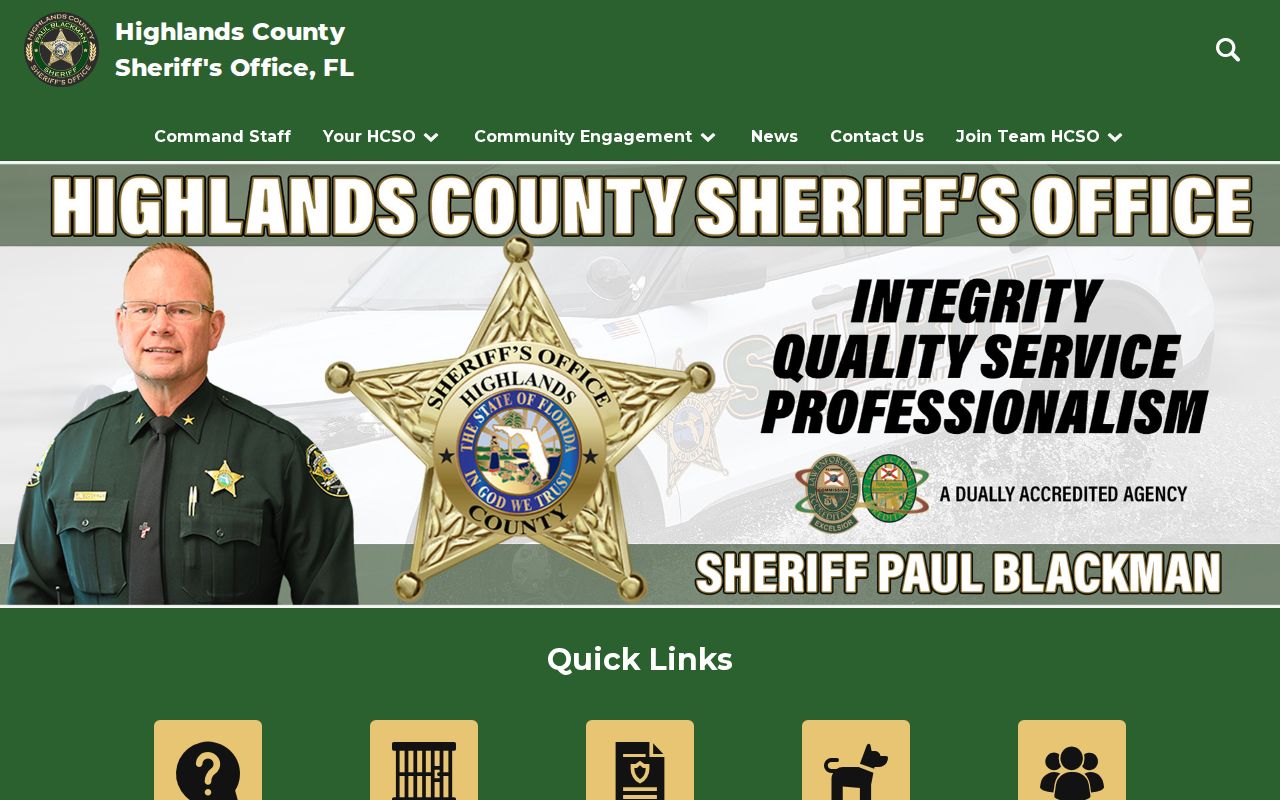
That agency view is a starting point, not a replacement for clerk or FDLE records.
Official Florida Background Checks
The Florida Department of Law Enforcement offers a public State of Florida Criminal History Record Check. Its Instant Search uses demographic details and costs $24 plus a $1 card-processing fee. The result is immediate and can be printed or emailed, but it is not certified. Because it is name based, a possible match does not establish fingerprint identity.
The FDLE Instant Search displays the statewide product and its search path.
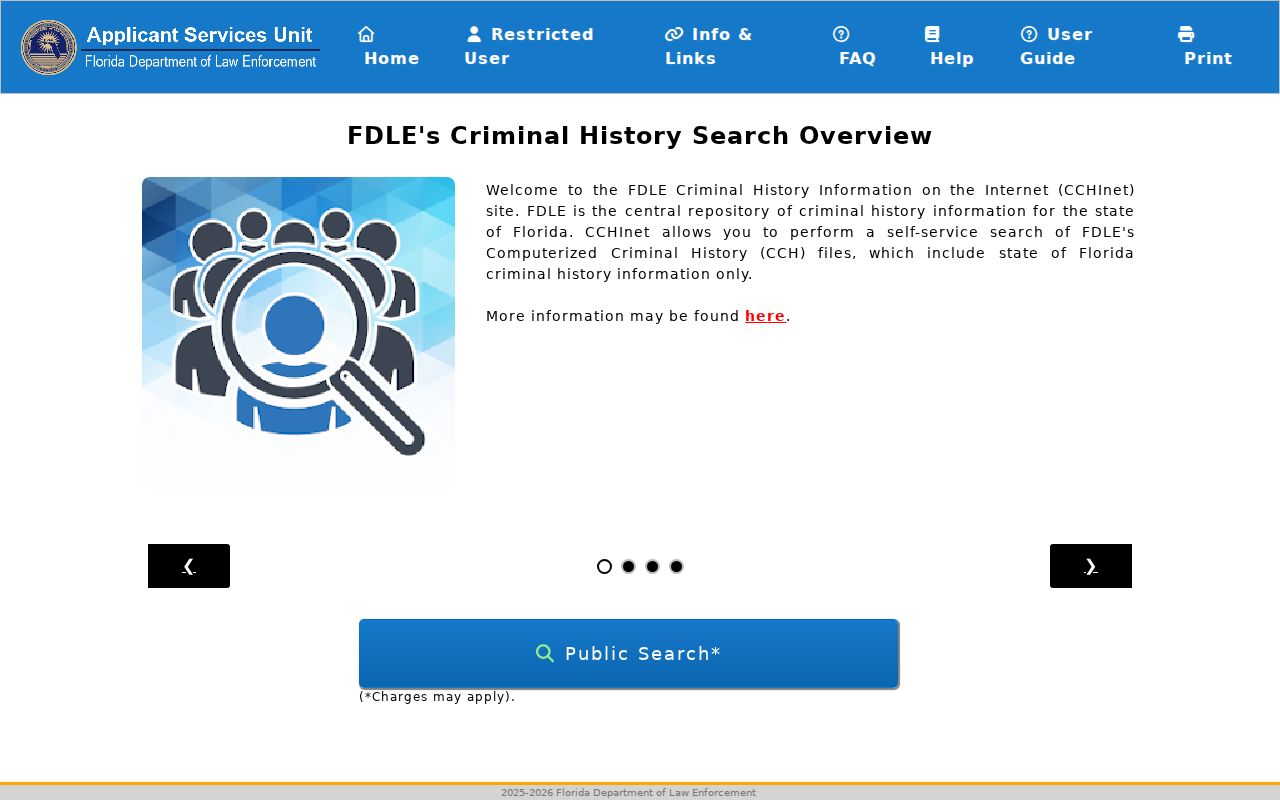
Use the identifying data and the final disposition source together before drawing a conclusion.
| FDLE route | Cost | Identity basis | Use |
|---|---|---|---|
| Instant Search | $24 plus $1 card fee | Name and demographics | Public Florida history search |
| Personal Review | Free | Fingerprints | Review and challenge your own Florida record |
| Authorized Livescan | Varies by provider and ORI | Fingerprints | Checks required by statute |
Highlands County Fingerprint Self-Review
FDLE Personal Review is the sound route for checking your own Florida record by fingerprints. Prints must be taken by a criminal-justice or law-enforcement agency and mailed with the application. The service is free. It can reveal an incomplete disposition or an arrest cycle tied to the wrong identity more reliably than a name search.
The FDLE Personal Review instructions set out the official steps.
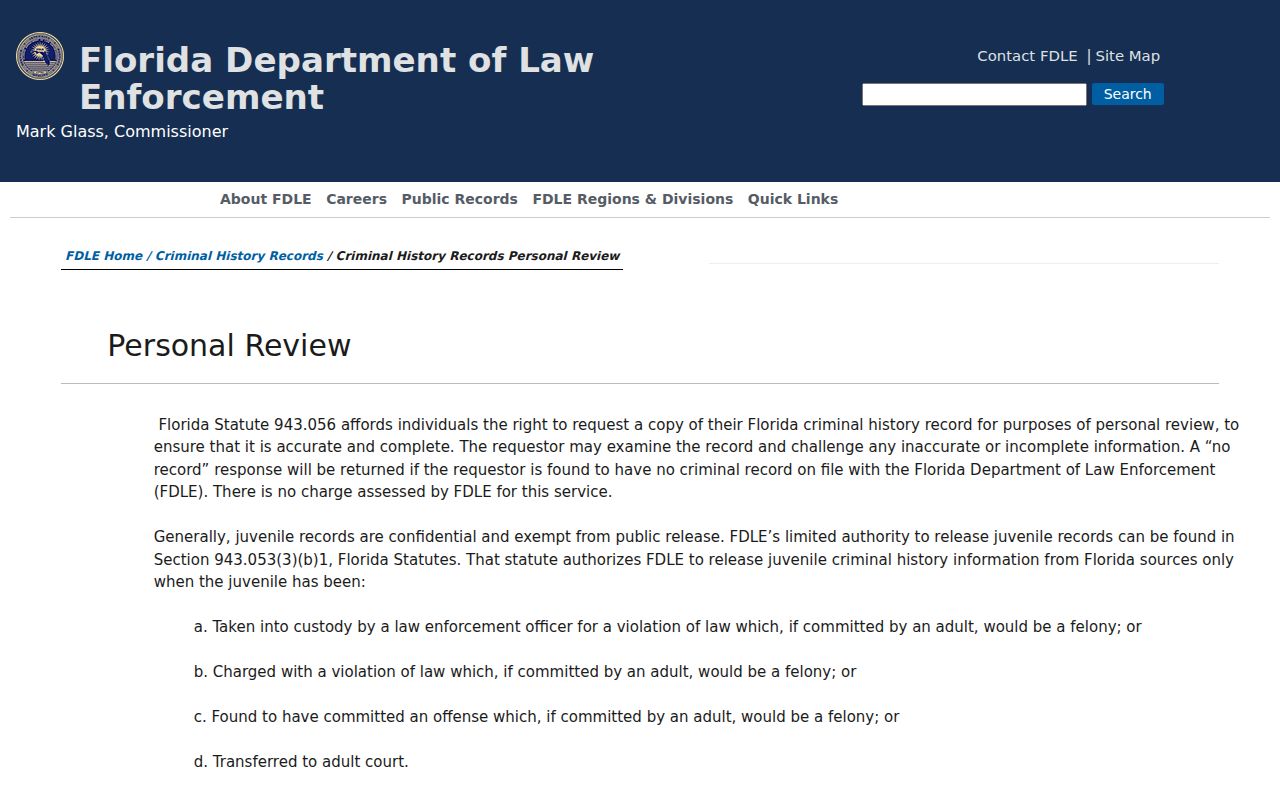
If the result lacks an outcome, obtain the certified Highlands County disposition and use FDLE's challenge process under section 943.056.
Types of Highlands County Criminal Records
A Highlands County incident can create several records at different times. The originating law-enforcement agency writes the report. HCSO adds a booking if the person enters the county jail. The State Attorney chooses charges, and the clerk opens a case after a filing. FDLE receives qualifying arrest fingerprints and later disposition reports.
Warrants require another split. The reviewed HCSO website did not provide a complete public warrant search. Call HCSO, ask the clerk about the named case and issuing court, and check FDLE's official wanted-person system. The HCSO mobile app advertises a Most Wanted feature, but that curated list is not every active warrant. A blank web result is not clearance, and only the issuing court or agency can confirm resolution.
- Incident and arrest reports describe an agency's investigation and probable-cause basis.
- Booking records track intake, charge, bond, and current custody at HCSO.
- Court files preserve filed counts, events, orders, judgment, and sentence.
- State histories compile reported Florida arrest cycles and outcomes.
- Supervision and registry records serve distinct FDC, FCOR, probation, or FDLE functions.
Highlands County Booking Record Flow
An arresting agency's paperwork and an Orange Street booking are separate records. HCSO intake can add fingerprints, a photograph, property inventory, custody status, charges, and bond. Section 943.051 sends qualifying arrest data to FDLE. The State Attorney may later file different counts, while section 943.052 requires prosecution and court outcomes to flow back to FDLE.
Record flow: Agency report › HCSO booking › FDLE arrest cycle › State Attorney filing › Clerk disposition › FDLE update.
Delays occur. A jail entry may appear before the court file, and a dismissed booking may remain visible unless Florida sealing or expunction law applies.
What a Highlands County Criminal Record Shows
Read each field by its source and date. The Highlands County court calendar can show a hearing snapshot, while the signed judgment proves the outcome. One count may be dismissed as another ends in a plea or judgment. A name alone is weak identification, and “pending” is not a finding of guilt.
| Name & Identifiers | Displayed name, aliases, date of birth, and other source-dependent identity fields. |
|---|---|
| Arrest / Booking Data | Agency, arrest and intake dates, booking identifier, alleged charges, bond, and custody. |
| Charges & Statutes | Arrest allegations or later prosecutor-filed counts, which may differ. |
| Disposition | Outcome by count, such as dismissed, nolle prosequi, acquitted, withhold, or adjudicated guilty. |
| Sentence | Custody, probation, fines, and other conditions stated in the signed order. |
| Custody / Supervision Status | Current jail, state prison, probation, or release status in the responsible system. |
Highlands County Inmate Roster Limits
The HCSO Inmate Search has one “Type to Search” control and is meant for current county-jail custody. It is not a full historical arrest database. The public landing result shows a displayed name, while details may include booking date, charges, bond, photograph, and custody. Do not assume fields that the live card does not show.
For a recent Highlands County arrest, search the roster first, then call HCSO if no current result appears. Release, transfer, or indexing can affect what the roster shows. Request the report from the arresting agency, since Sebring Police, Lake Placid Police, Florida Highway Patrol, and other agencies retain their own narratives. Check the court calendars after prosecution begins. The HCSO news archive contains selected official releases, but it is not a full arrest log and should not be read as one.
For released booking data, call HCSO at 863-402-7211 or submit a public-records request. For state prison or felony supervision, use the FDC Offender Search.
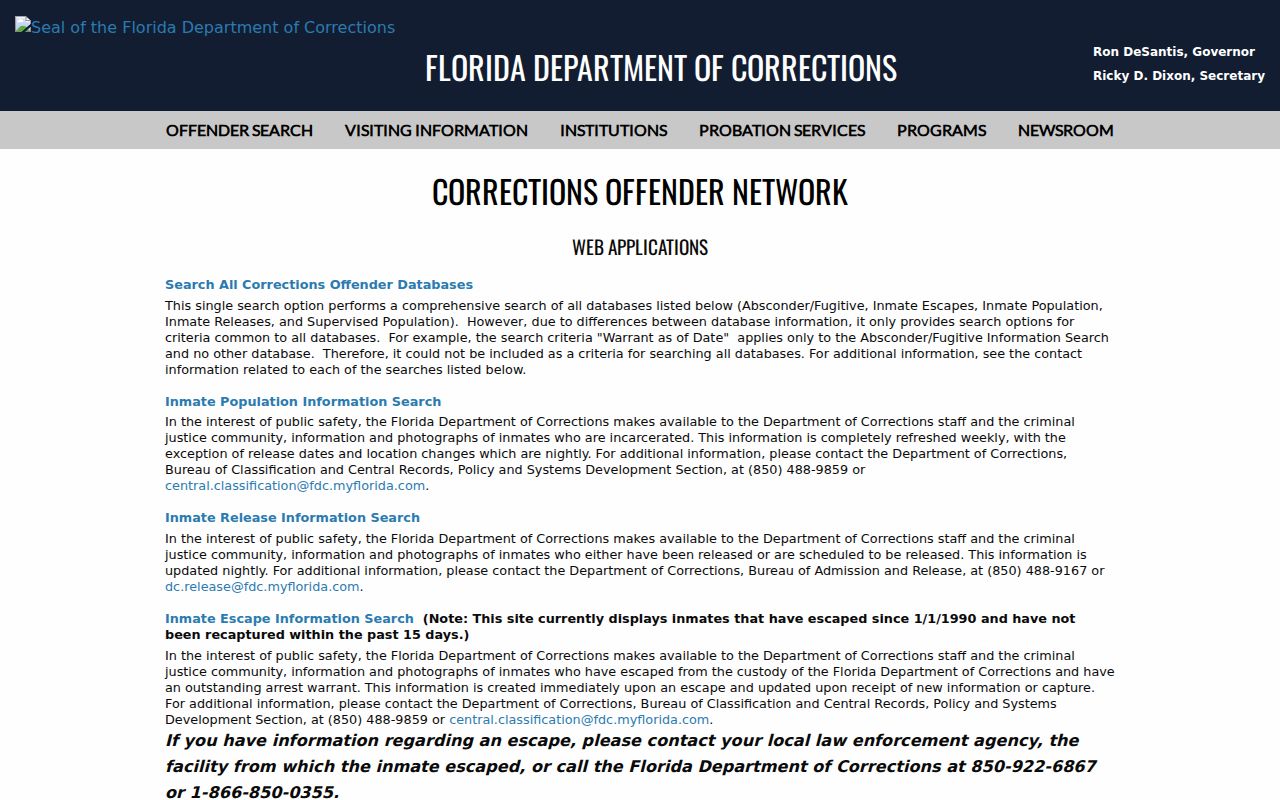
The FDC screen answers a state custody question, not whether someone is now in the Highlands County jail.
Public Access Laws for Highlands County Criminal Records
Florida Constitution article I, section 24 and chapter 119 support access to public records, but access follows exemptions. Ask the office that created or maintains the record. An agency may redact active investigative facts, protected victim details, juvenile information, account data, and sealed or expunged material.
Key Statutes:
Florida Statutes § 119.07 permits inspection and copies, with duplication and extensive-use charges.
Florida Statutes § 119.071 protects active investigations and listed personal information.
Florida Statutes § 943.053 governs FDLE criminal-history dissemination and fees.
Florida Statutes § 943.056 provides subject review and challenge rights.
Highlands County Justice Campus
The records offices form a compact Sebring cluster, yet each counter has a separate job. The Highlands County Courthouse at 430 South Commerce Avenue contains the clerk function for case files. HCSO headquarters is at 400 South Eucalyptus Street, the jail intake is at 338 South Orange Street, and the State Attorney office is at 411 South Eucalyptus Street.
Highlands County Clerk
430 S. Commerce Ave.
Sebring, FL 33870
Filed court cases and copies
HCSO Headquarters
400 S. Eucalyptus St.
Sebring, FL 33870
863-402-7211
County Probation
47 Wilhite St.
Avon Park, FL 33825
863-402-7100
The official Highlands County Clerk site identifies the court-record office.
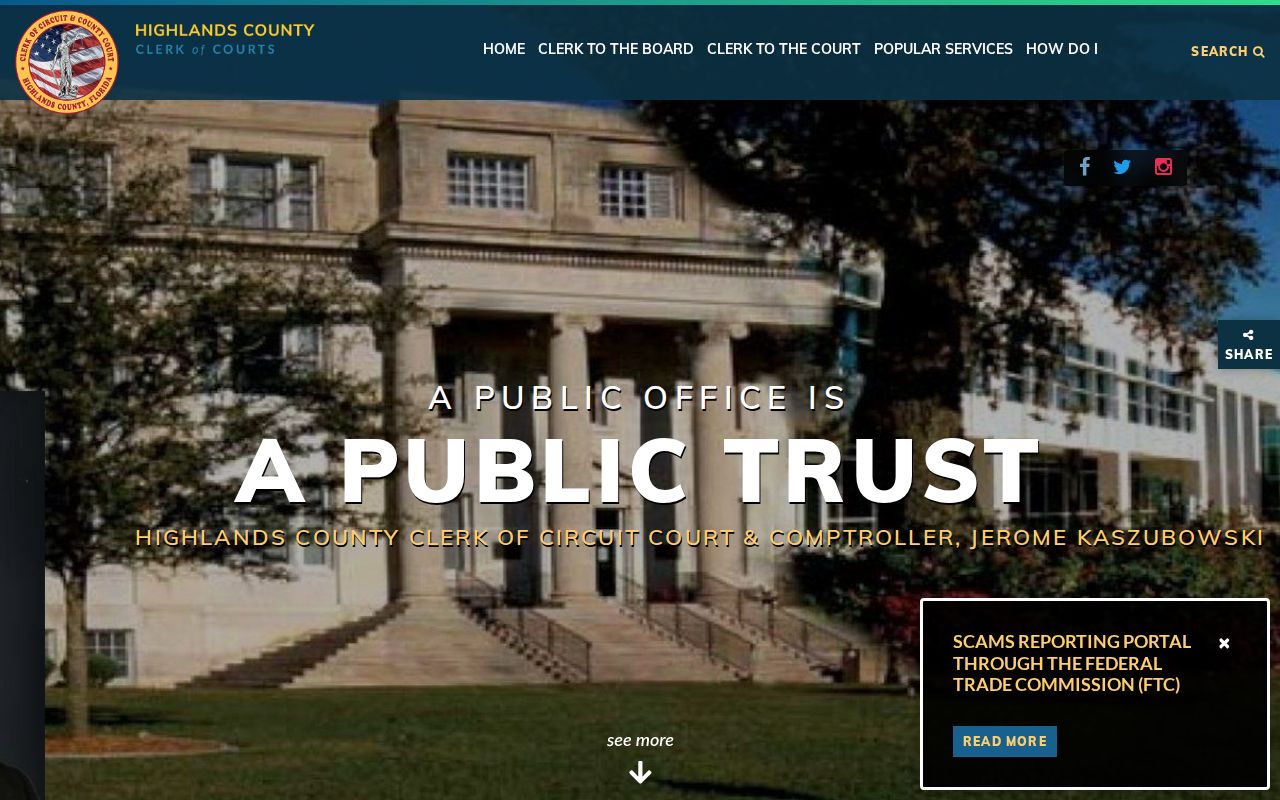
Use the clerk counter for the filed case, not the sheriff headquarters.
Sealed, Expunged, and Restricted Records
Florida sealing makes a qualifying record confidential and exempt. Expunction generally directs custodial agencies to destroy or obliterate it, while FDLE keeps a limited confidential entry for statutory administration. Neither remedy follows from a dismissal alone, and both have disclosure exceptions.
A court-ordered route starts with an FDLE Certificate of Eligibility. The package generally includes fingerprints, certified dispositions, the application, and a $75 FDLE fee. After FDLE issues the certificate, the applicant files the petition and related papers in the Highlands County court. Prior adjudications, earlier relief, and excluded offenses under section 943.0584 may bar relief. Automatic sealing under section 943.0595 is a separate, limited route.
After an order, verify the Highlands County Clerk's public display and later obtain an FDLE Personal Review if needed. When an entry persists, send the order and identity documents through the appropriate challenge route. A withhold is not a dismissal. Nor does a dismissed case by itself erase the HCSO booking or FDLE arrest cycle. Eligibility turns on the whole record and the specific Florida remedy.
Highlands County Supervision Records
Misdemeanor and felony supervision take different routes. The Highlands County Office of County Probation supervises misdemeanor cases from 47 Wilhite Street in Avon Park. It publishes weekday hours of 8 a.m. to 4:30 p.m. and closes from 12:30 to 1:30 p.m. FDC Community Corrections handles felony probation, community control, and post-prison supervision.
Parole and conditional release add another state layer through the Florida Commission on Offender Review. County probation, FDC supervision, and FCOR authority should not be merged. The Highlands County court sentence identifies the ordered term, while the responsible supervision office shows current administration. A violation-of-probation event on a calendar is an allegation and proceeding, not proof of a new conviction.
The county misdemeanor probation page gives the local office details.
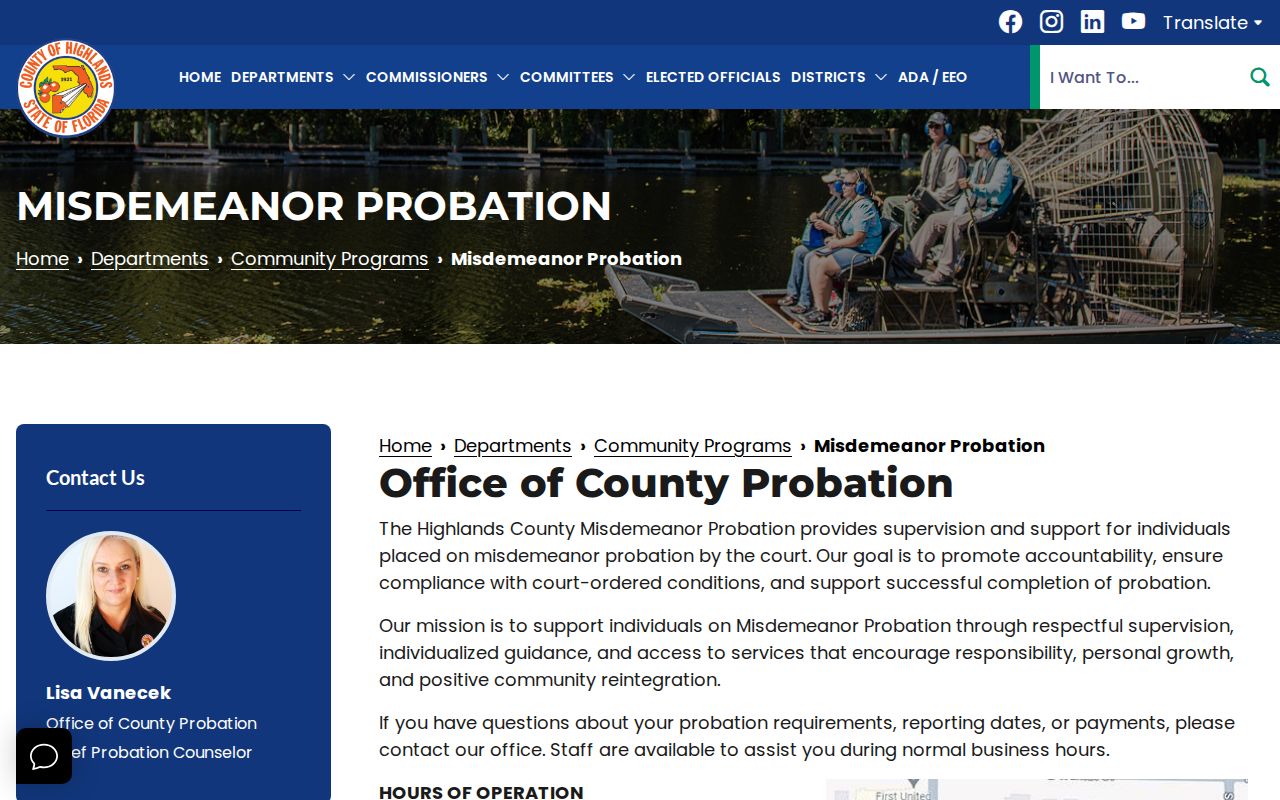
A supervision result does not replace the signed sentence in the Highlands County court file.
Highlands County Charging Offices
The State Attorney for the Tenth Judicial Circuit decides whether and what to charge. The Public Defender represents eligible appointed clients. Neither office is the public custodian of the filed Highlands County case, so requests for pleadings, orders, and dispositions still go to the clerk.
This division explains why booking charges and filed counts may not match. An officer records the arrest basis. Prosecutors then review the facts and choose whether to file an information and which counts it should contain. The clerk preserves that filing and later court action. A Highlands County record check should therefore treat the arrest label as one stage, not as the court's final statement.
The Tenth Circuit State Attorney site provides prosecution and victim-service contacts.
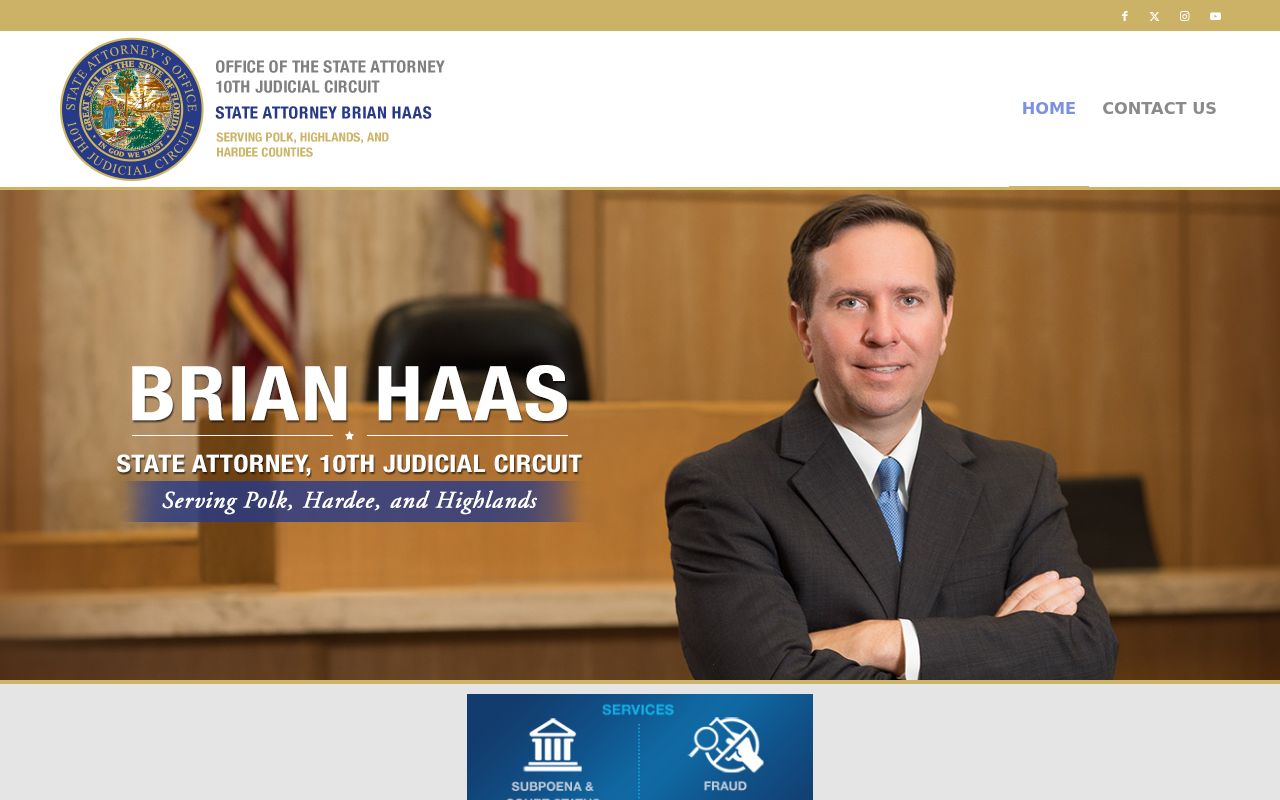
Its role begins after the arresting agency sends the case for a charging decision.
The Tenth Circuit Public Defender site explains appointed-defense access.
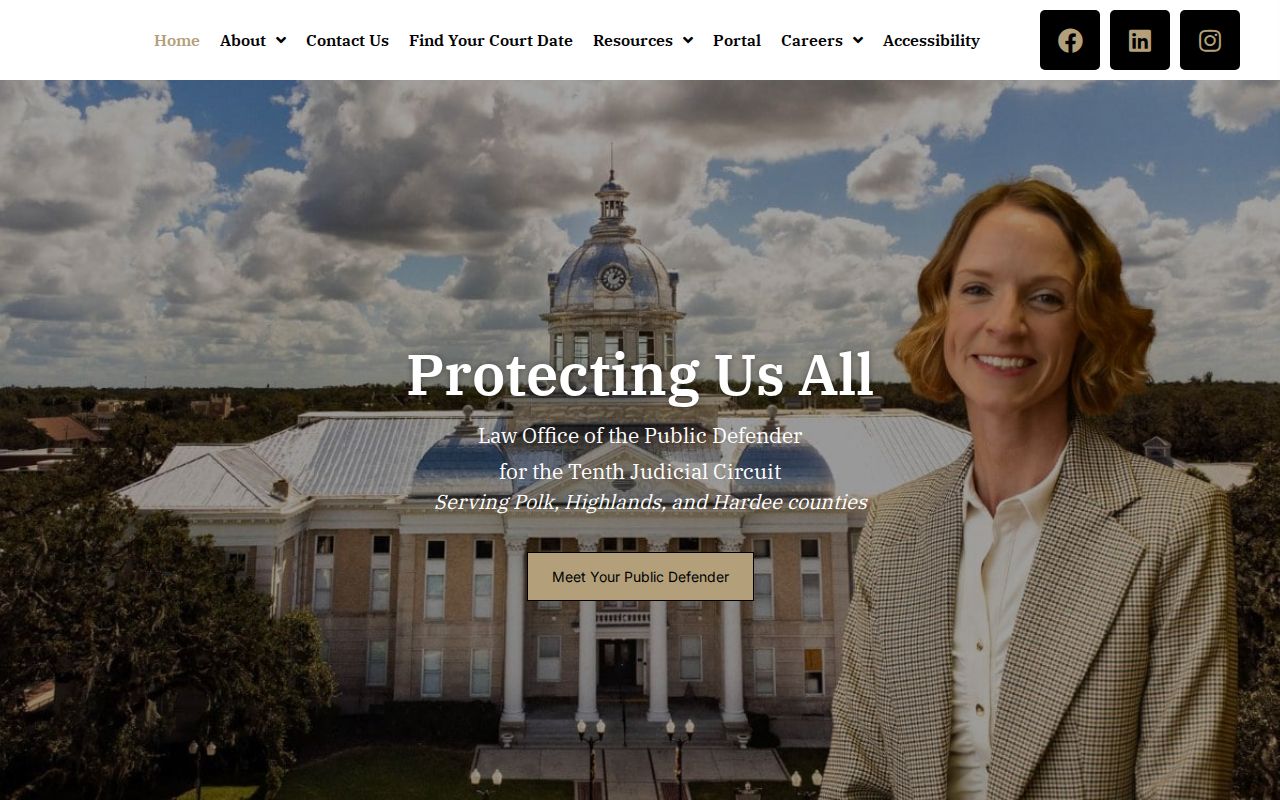
Defense representation and public record custody remain distinct functions.
Criminal Records by City in Highlands County
Highlands County has three incorporated municipalities. Sebring Police and Lake Placid Police keep the reports they create, while HCSO supplies law enforcement for Avon Park. Arrested people generally enter the central HCSO jail, and prosecutions converge at the Highlands County Clerk. Florida does not provide a separate municipal criminal court portal for these cities.
Sebring Criminal History
City police reports, HCSO booking, and Highlands County court cases
Avon Park Criminal History
HCSO records, county booking, and local misdemeanor probation
Lake Placid Criminal History
Town police reports, HCSO booking, and county court files